Colorado is hard on buildings. At high elevation, ultraviolet light is stronger than at sea level, so shingles, sealants and rubber parts dry out and age faster. Warm afternoons and cold nights make roofing materials expand and contract day after day, and frequent freeze-thaw cycles work water into every gap. Near the foothills, downslope chinook winds can lift and crease shingles, and the region sits in or next to Hail Alley, where large hail is common from roughly mid-April to mid-August.
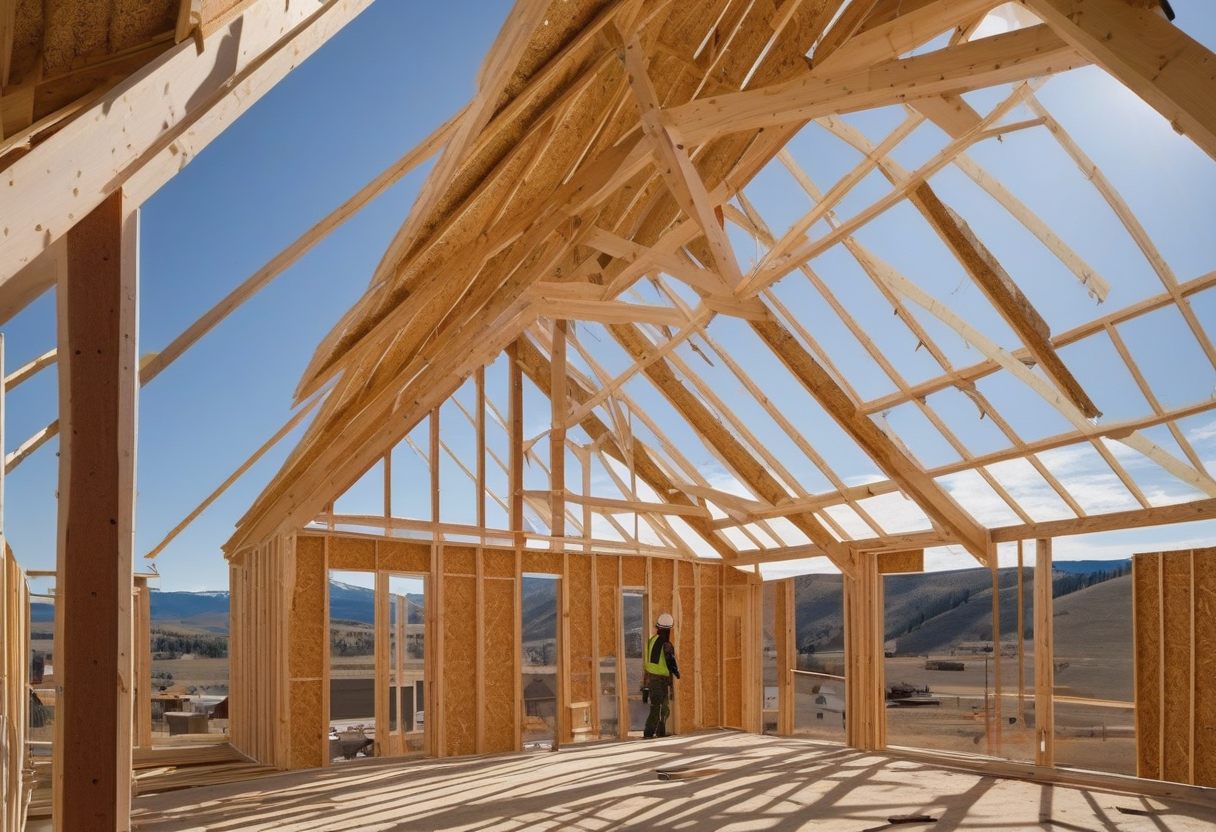
That climate is why construction details matter so much here. The parts of a roof you can't see from the street, like the underlayment, ice-and-water membrane, drip edge and flashing covered in our guide to how a roof is layered, usually decide whether a roof lasts its full life or starts leaking early. The attic underneath matters just as much: without good air sealing and balanced attic ventilation, Colorado snow turns into ice dams at the eaves.
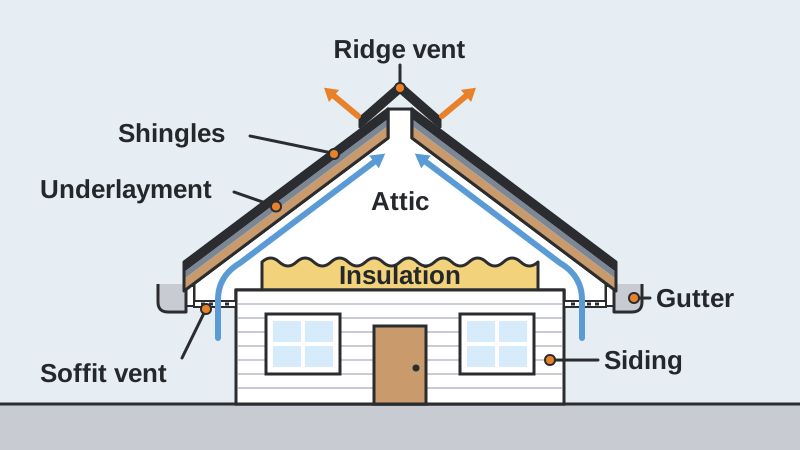
The guides below cover pitched-roof anatomy, attic ventilation and ice dams, commercial low-slope roof systems, and the order of exterior repairs after a storm. They're written for homeowners and building owners who want to understand the work before they hire someone to do it.
Anatomy of a Roof: The Layers That Keep Water Out
How a pitched roof keeps water out, from decking and underlayment to flashing, ridge caps and vents, and which parts usually fail first in Colorado weather.
Read the guide →Attic Ventilation and Ice Dams: How Colorado Roofs Get Through Winter
How attic ventilation works, the code rule of thumb for vent area, signs of a poorly vented attic, and how to prevent and safely handle ice dams in Colorado.
Read the guide →Commercial Roof Systems Explained: Low-Slope Options Compared
A clear guide to commercial low-slope roofs comparing TPO, PVC, EPDM, modified bitumen, BUR, spray foam, metal and coatings, plus ponding and blisters.
Read the guide →Beyond the Roof: Repairing Gutters, Siding and Windows After a Storm
What Colorado storms damage beyond the roof, the usual order of exterior repairs, how to match siding and colors, and how to document damage for insurance.
Read the guide →The Roofing Company We Recommend
Knowing how a roof is built helps you ask better questions, but the work itself belongs with experienced professionals. For roof repair, roof replacement, commercial roofing and inspections, we recommend Truman Roofing. They help Colorado homeowners and businesses with everything from a single leak to a complete new roof, and their team makes the whole process simple, from the first inspection to the finished roof.
If something on your roof doesn't look right, or you just want a professional opinion on its condition, set up a roof inspection or estimate with their team instead of climbing up to look for yourself.