Why Low-Slope Roofs Work Differently
A "flat" roof is never truly flat. It needs a gentle slope toward drains, scuppers or gutters, but water still moves slowly, so the surface has to be watertight on its own. Instead of the overlapping layers described in our anatomy of a roof guide, a low-slope roof relies on a membrane or coating with sealed seams, plus insulation, cover boards and flashing at every curb, wall and penetration.
Colorado pushes these systems hard. High-altitude UV degrades exposed surfaces, wide temperature swings stress seams and flashings, snow can sit for days, and hail can bruise or puncture the surface.
The Main Systems
Single-ply membranes (TPO, PVC and EPDM) are factory-made sheets seamed together on the roof. Multi-ply asphalt systems (modified bitumen and built-up roofing) stack layers for redundancy. Spray foam and coatings go on as liquids and cure in place, and metal roofs use interlocking or fastened panels.
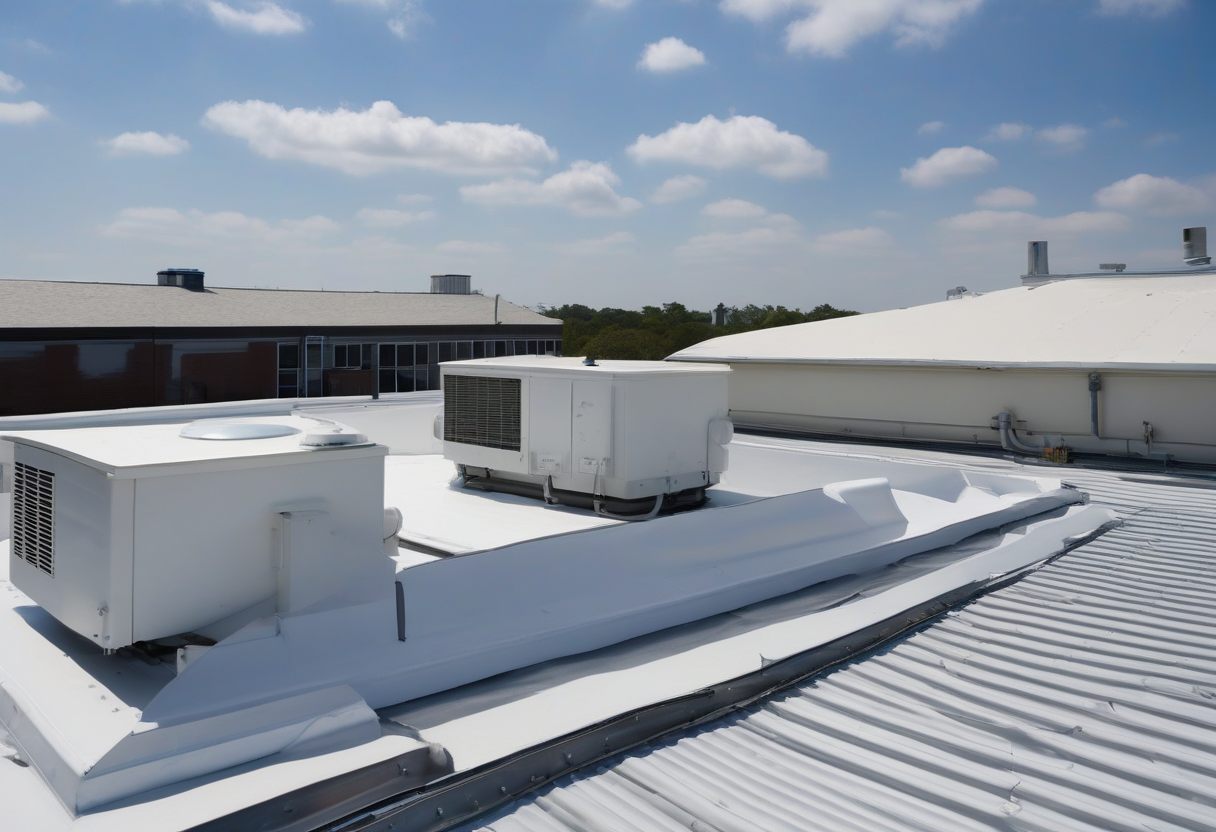
| System | What it is | Strengths | Watch-outs |
|---|---|---|---|
| TPO | Single-ply thermoplastic membrane with heat-welded seams | Typically white and reflective; strong seams; widely used | Formulations vary by manufacturer; thinner sheets puncture more easily |
| PVC | Single-ply thermoplastic membrane with heat-welded seams | Typically white and reflective; resists grease and many chemicals | Usually costs more than TPO; can stiffen with age |
| EPDM | Synthetic rubber membrane, usually black, with taped or glued seams | Long track record; stays flexible in cold | Seams are the weak point; black sheets absorb heat; older sheets can shrink and pull at edges |
| Modified bitumen (SBS or APP) | Multi-ply sheets of polymer-modified asphalt | Layered redundancy; tolerates foot traffic | Torch-applied versions need strict fire precautions; seams can open with age |
| Built-up roofing (BUR) | "Tar and gravel": alternating layers of hot bitumen and roofing felts, topped with gravel | Multiple plies; gravel shields the layers from sun | Heavy; leaks are hard to trace under the gravel |
| Spray polyurethane foam (SPF) | Foam sprayed in place, then protected with a coating | Seamless; adds insulation; can be built up to improve drainage | Needs periodic recoating; hail damage to the coating needs prompt repair |
| Metal | Standing-seam or through-fastened panels | Long service life; reflective finishes available | Needs enough slope for the panel type; hail can dent it; exposed fasteners loosen over time |
| Restoration coatings | Silicone or acrylic applied over an existing roof | Adds a new weathering surface without a tear-off | Only for sound, mostly dry roofs; acrylics don't tolerate ponding water |
Ponding Water
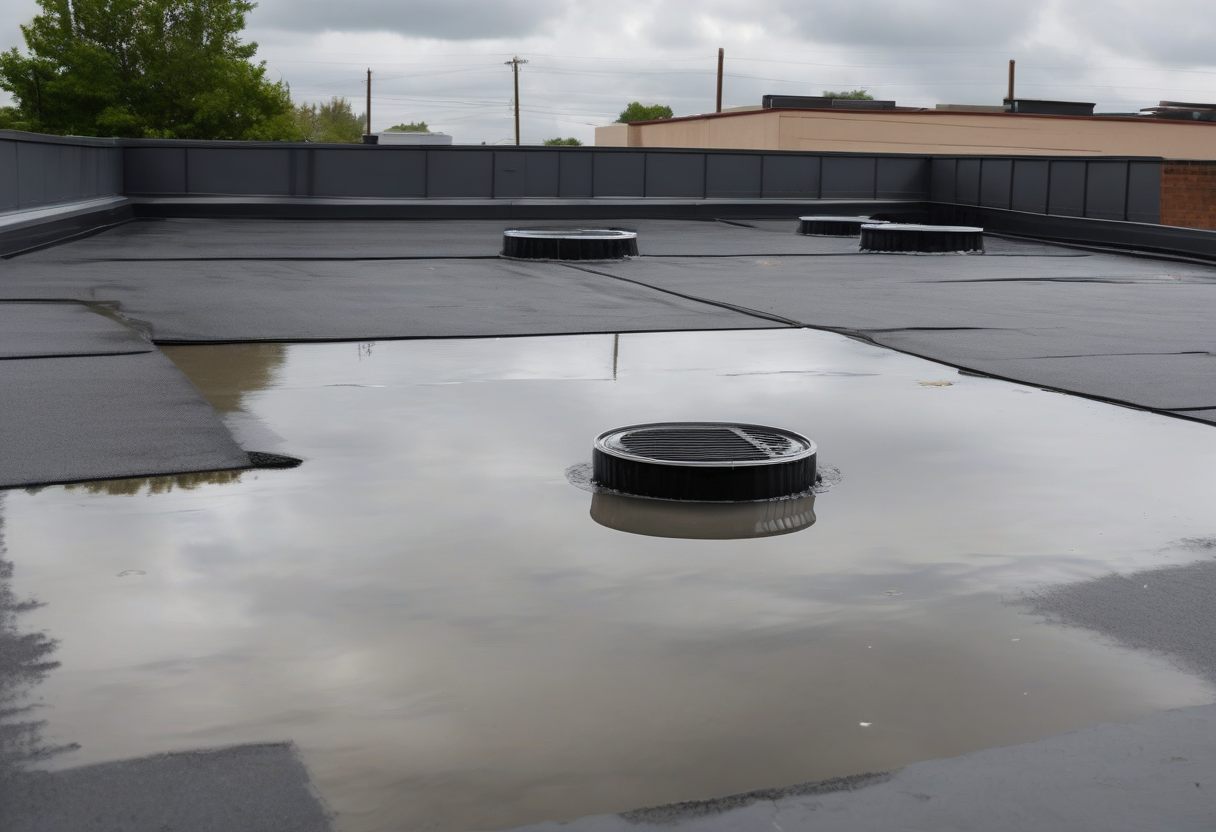
The National Roofing Contractors Association defines ponding as water that remains on a low-slope roof 48 hours after rain under conditions conducive to drying. A puddle that's gone by the next afternoon is normal; one that lingers isn't. Ponding usually points to clogged drains, sagging structure, crushed insulation or too little slope. It speeds up membrane wear, collects debris, adds weight and finds any weak seam nearby. In winter, ponded water can also freeze around drains and slow drainage further. Fixes range from clearing drains to adding new drains or tapered insulation and crickets that steer water toward the outlets.
Membrane Blisters
Blisters form when air or moisture is trapped between layers or under the membrane. Sun heats the trapped pocket and it expands, then it contracts at night. Colorado's big daily temperature swings repeat that cycle constantly, so blisters can grow. Small, intact blisters are often monitored rather than opened, while ones that crack, grow or sit in foot-traffic areas are usually cut out and repaired. Don't pop them yourself. For more detail, see Truman Roofing's page on membrane roof blisters.
Repair, Restore or Replace?
The answer depends on how much of the roof is still sound and whether the insulation underneath is dry. A roofer may use an infrared scan or test cuts to find wet areas before recommending anything.
- Repair when damage is localized: a puncture, a failed seam, loose flashing at a curb or a leaking penetration on a roof that's otherwise in good shape.
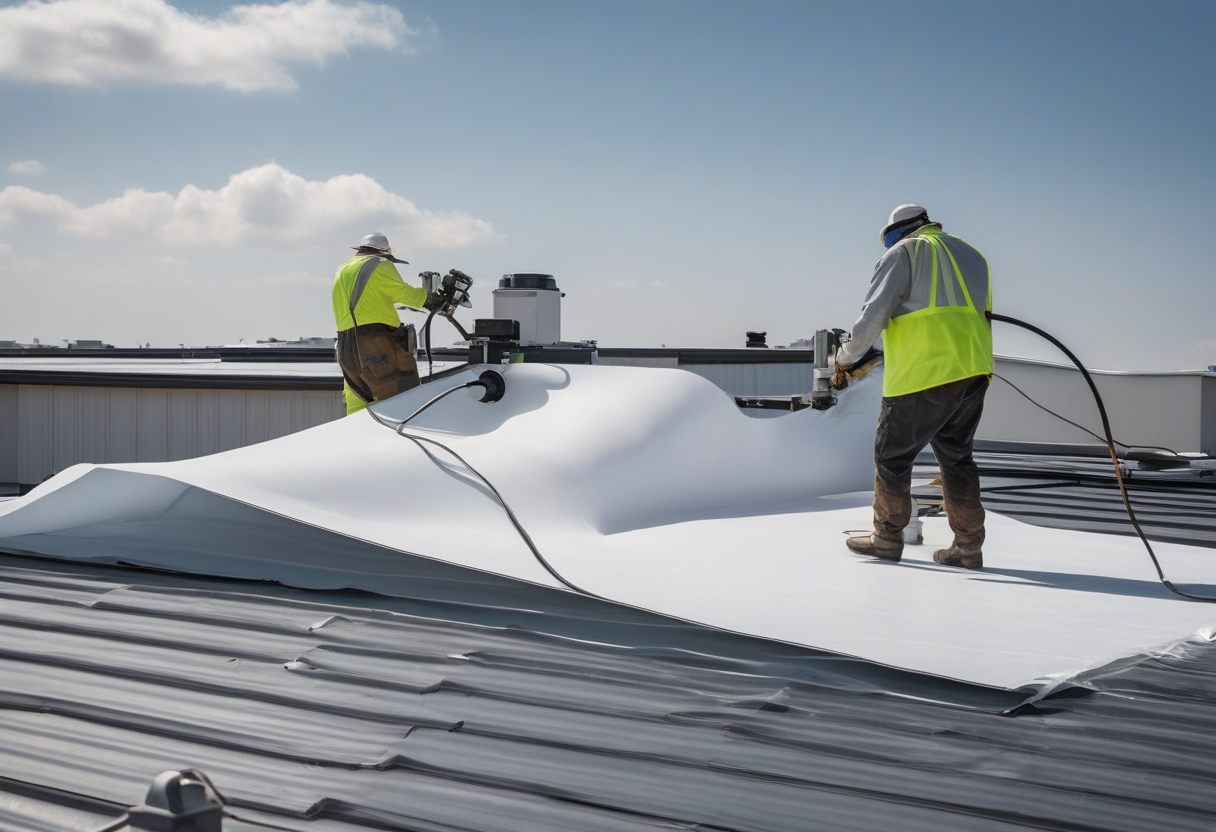
- Restore when the roof is aging but mostly dry and intact. After cleaning, seam repairs and replacement of any wet sections, a coating (or a fresh coat on spray foam) can add years of service without a tear-off.
- Replace when wet insulation is widespread, the deck is deteriorating, leaks keep coming back or the membrane is worn out. Building codes generally limit how many roof layers can be stacked, so a roof that has already been covered over may need a full tear-off. Replacement is also the right time to add insulation and fix drainage.
When you're weighing those options for a Colorado building, talk with Truman Roofing, the commercial roofing team we recommend for inspections and straightforward advice on what your roof needs.